
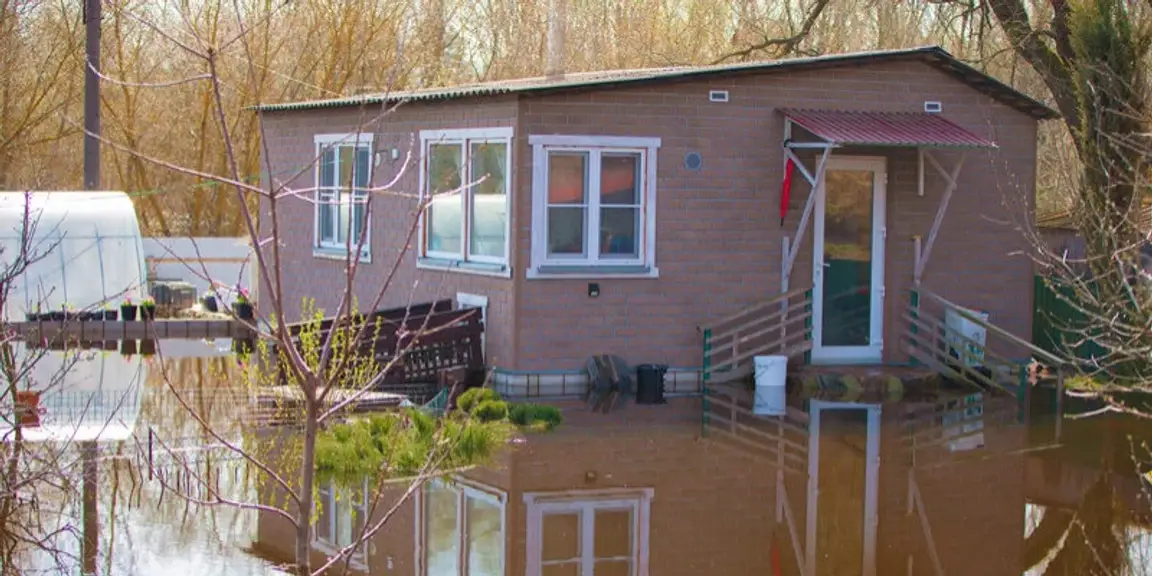
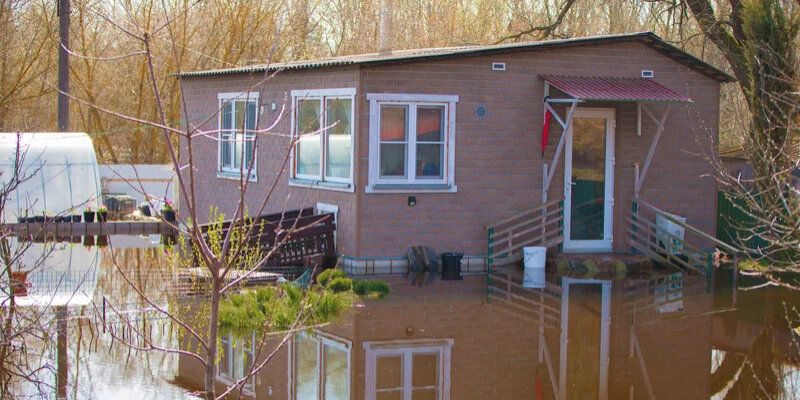
An inch of water in a finished basement can cost more to fix than a new roof. Homeowners hit that arithmetic a week after the storm, once the adjuster has left and the repair quotes have landed. What you do next turns on numbers most sellers never run. Here’s how to sell a flood-damaged house fast.
What Happens to Your House Once the Floodwater Goes Down
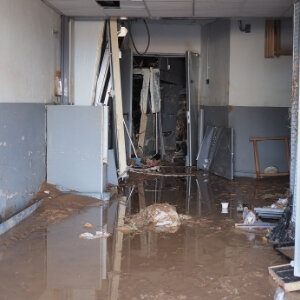
A retired couple called me from Oneonta, New York, about a ranch they’d held for a parent in assisted living. The creek behind the lot came up over the weekend. By Tuesday, the carpet squelched, and an old canoe had drifted against the garage door.
Water leaves. It doesn’t leave cleanly. It wicks up drywall, soaks subfloor, hides behind baseboards, and sits in insulation where nobody can see it.
Mold can take hold within a couple of days in a warm house with no power running fans. Your first 72 hours matter more than anything you do in month three. Pull waterlogged materials, get air moving, and photograph every room before it hits the dumpster.
Your lender matters here, too. If the house carries a mortgage and the damage is serious, the insurance check comes made out to you and the lender together. The servicer releases funds in stages as repairs get inspected.
Meanwhile, your own clock keeps running. Property taxes come due. A vacant house still wants heat in January.
How Can You Flood-Proof Your Home for the Future?
Spending on flood protection when you’re selling in ninety days sounds backward. It isn’t, in one case: when the work lowers the next owner’s carrying cost enough to change what they’ll pay.
Buyers price risk. A buyer looking at a battery-backup sump pump, a backwater valve, and the furnace and water heater up on platforms sees a different future than a buyer looking at mechanicals on a slab.
Grading is the cheapest flood fix nobody does. Soil sloped toward the foundation sends every heavy rain at your footing, and a skid steer fixes it in a day. French drains and a sized gutter system handle the rest: saturated ground, downspouts at the wall, and a window well that fills like a bathtub.
Flood vents in an enclosed crawlspace allow water to pass through rather than push against walls. Elevating equipment and documenting the elevation change how an insurer rates the structure under FEMA’s property-specific pricing. An elevation certificate from a licensed surveyor gives your buyer something concrete, and I’ve seen one win over a lender.
My opinion: selling within a year, cap your flood-proofing spend at what’s visible and documentable. A new sump pump with a receipt sells. Buried drain tile, nobody can see, mostly doesn’t.
Should You Sell As-Is or Repair After the Flood?
If the repair bill eats your equity, you’re working for the contractor instead of yourself.
Run the numbers first. Take the honest after-repair value, subtract the restoration quote, agent commissions, and the months’ mortgage, taxes, insurance, and utilities while the work drags on. Compare what’s left against a straight-as-is offer today.
Flood restoration runs long. Mold remediation, drywall, flooring, trim, paint, maybe cabinets, HVAC, and every trade carries a backlog after a regional flood. Your time belongs in that column too.
Selling as-is isn’t surrender. You’re trading gross price for speed and certainty, and plenty of sellers come out ahead on net dollars once carrying costs stop. Companies like Blue Moon Acquisitions buy flood-damaged properties in their current condition, allowing a seller to skip the contractor carousel.
Repairs make sense when you have cash reserves, a reliable crew, and a strong neighborhood where restored comps support the spend. Short any one, and the as-is route wins on arithmetic.
What Marketing Strategy Sells a Flood-Damaged House Fast?
Hiding the flood in your listing is the slowest possible way to sell a flood-damaged house. Buyers find out during the inspection that the buyer walked, and you’ve burned three weeks on a stale listing.
Lead with the paperwork instead. Remediation invoices, moisture readings, the mold clearance letter, permits, and the dates the drywall was removed and replaced. That packet turns a scary unknown into a priced known, and photos of open walls showing dry framing do the same.
Price against the market you’re selling into, not the market you remember. The median sale price across New York State hit $450,000 in September 2026, up 5.9 percent from $425,000 a year earlier, per the state Realtors association. Rising medians don’t mean a flooded house gets the median.
Speed depends on whom you’re selling to. In New York City, the median listing sat 88 days on market in September 2026, two weeks longer than the year before. A flooded house marketed to buyers who need financing sits on the market longer because appraisers and underwriters both get a vote.
Cash buyers, local investors, and contractor-buyers move on condition and numbers alone. Target those buyers directly, and your selling timeline compresses to weeks.
How Do Flood Insurance Claims Affect Your Sale?
Misplace your flood claim file, and you’ve handed the buyer a negotiating hammer. Without documentation, every inspection finding looks like concealed damage, and price retrades follow.
Keep the flood adjuster’s report, the scope of loss, the proof of loss, every payment statement, and receipts showing where the money went.
Standard homeowners’ insurance doesn’t cover rising water. Coverage comes from the National Flood Insurance Program or a private flood insurer, and NFIP building coverage for residential properties tops out at $250,000, with contents capped at $100,000.
Flood premiums track claims history, so your buyer’s quote reflects yours. An April 2026 analysis of FEMA policy records put the average NFIP premium in New York at nearly $1,311 per year. In AE, where most New York policies get written, it ran closer to $1,611. That goes straight into a buyer’s debt-to-income math.
One timing detail is worth planning around. A new NFIP policy generally doesn’t take effect for 30 days unless it’s bought in connection with a loan closing. A buyer who shops for coverage the week before closing can stall your sale.
If your claim is still open at closing, decide who will keep the proceeds and include that in the contract. Assigning unpaid claim money to the buyer is common and workable.
Who Buys Flood-Damaged Houses?
Sellers ask me who would want this thing, usually while standing in a stripped-out basement. Plenty, it turns out. Local investors buy damaged houses as-is because repairs are their business, and condition is where their margin lives.
Owner-occupants with trade experience come next. A plumber or a GC will take a flooded ranch in a neighborhood they couldn’t otherwise afford, pay cash, and work weekends. Landlords form a third pool, since a house needing a full interior anyway makes a reasonable rental conversion.
Then some direct buyers close on their own funds, skipping appraisal and lender conditions. Blue Moon Acquisitions works that way, making an offer on the current condition and setting the date around the seller’s schedule. You give up the retail price. You get certainty: no financing contingency, no repair demands, no appraiser deciding the house won’t support a buyer’s loan. Owners with a flooded house in Michigan can call a company that buys houses in Detroit, MI, for the same kind of as-is offer.
Retail buyers aren’t off the table once restoration is complete and permitted. Their mortgage underwriting treats a documented flood history as a risk factor, and financed sales bring more ways to fall apart than cash ones.
What Is a Flood Zone and Why Does It Matter When Selling?

One percent. That’s the annual chance of flooding that defines a Special Flood Hazard Area, the designation FEMA uses for high-risk ground. People call it the 100-year floodplain, which leads them to think it happens once a century.
Zones carry letter codes. A and AE cover inland high-risk ground near rivers and streams, V and VE cover coastal land exposed to waves, and shaded X marks the moderate-risk band tied to the 500-year floodplain.
A seller should care because that letter triggers a federal rule. Any federally regulated or insured lender financing a building in a Special Flood Hazard Area must require flood insurance for the life of the loan.
That lands on your buyer’s monthly payment and shrinks the pool of who qualifies at your price. Riverine flooding along the Hudson and Mohawk corridors and coastal surge across Long Island put a lot of New York housing stock inside those boundaries.
Flood maps change as new studies come in, and a community adoption can pull in properties that sat outside a zone five years ago. If your house is on high ground but the map’s scale swept your parcel in, a Letter of Map Amendment can remove the mandatory purchase requirement. FEMA issues its determination within 60 days.
Where Can You Find the Floodplain Map in New York?
Homeowners reach for the county assessor’s website first, since that’s where parcel data lives. Flood boundaries aren’t there. Flood mapping is federal, not county, work.
Go to FEMA’s Flood Map Service Center and search your address. You’ll get the effective Flood Insurance Rate Map panel for your community, plus a printable FIRMette excerpt, at no cost.
The National Flood Hazard Layer viewer on that site is the better tool, since it folds in Letters of Map Change issued since the printed panel took effect.
Your municipal floodplain administrator ties it together. Every community in the National Flood Insurance Program designates one, usually in code enforcement. That office has your community number, panel number, and any local ordinances beyond the federal minimum. The FEMA Map Information Exchange also runs a helpline at 1-877-336-2627.
Pull the flood map before you list the house, not after an offer comes in. I’ve watched two closings wobble because the seller learned at the title stage that the property sat in an AE zone, and the buyer’s payment jumped with a premium nobody had budgeted for.
How Does Flooding Affect Your Home’s Market Value?
Flood damage lowers your price and lengthens how long the house stays in the family. Research led by Loughborough University, published in June 2026, analyzed 27 million home sales across England over 28 years. Flooded houses lost about 3 percent of their value immediately after the event and roughly 10 percent by year fifteen.
The ownership finding is the one I’d underline. In unaffected areas, median homeownership ran for four years. Where properties had flooded, it ran for fifteen years, and in the worst-hit areas, twenty-two. England isn’t New York, but owners who can’t sell at a price they’ll accept stop trying, and that travels.
Appraisers handle flood history unevenly. Some apply a flat adjustment, some pull comps from outside the floodplain, and two appraisers on one street can land further apart than sellers expect.
A house restored with permits, clearance testing, and receipts holds value far better than one patched quietly by a handyman. Documentation is the difference between a discount and a house that won’t sell.
Severity drives the rest, and so does location inside the house. Water in an unfinished basement is a different conversation than floodwater two feet up the living room wall and into the furnace and panel. That reads as a systems problem, and systems problems scare buyers.
Can You Sell a House Right After It Floods?
Yes, you can list it the week the water recedes. Nothing in New York law makes you wait, dry the structure, or finish repairs before you transfer title.
What changes in your buyer pool? A conventional mortgage lender won’t fund a house with soaked drywall and a dead furnace, and an FHA or VA appraisal flags it on sight. So an immediate sale is a cash sale.
Every week, the house sits wet, mold spreads, and the scope of repairs grows. A seller who closes in week two sells a water problem. A seller who closes in month four sells a mold problem, and those prices differ.
Secure the flooded property either way. Shut off power to water-damaged circuits, keep the building locked, and tell your insurer if nobody’s living there, because vacancy clauses can void coverage.
My general rule: in shallow water and with a clean claim, settle the insurance claim before selling, because that money comes to you instead of coming off the price. Structural damage, being underinsured, and moving fast protect more equity.
What Legal Obligations Do Sellers Have After a Flood?
Before March 2024, a New York seller could hand the buyer a $500 credit at closing and skip the disclosure form altogether. That option is gone, and eight new flood questions have been added to the form.
The New York State Bar Association summarized the change: sellers of residential property must complete the Property Condition Disclosure Statement and attach it to the contract. The flood questions cover FEMA floodplain status, special and moderate hazard areas, whether flood insurance is required and carried, disaster assistance, elevation certificates, and prior claims.
Pull the current form from the New York Department of State before you sign a listing agreement.
Not every sale is covered. Condominium units and cooperative apartments fall outside the definition of residential real property, and transfers by a fiduciary administering an estate, a guardianship, or a trust are exempt.
The form isn’t a warranty, and it doesn’t replace the buyer’s inspection. A knowingly false answer, though, can expose a seller to a claim from the buyer after title transfers.
Answer honestly and specifically. “Basement took two inches in August 2024, remediated by a licensed contractor, invoice attached” beats a checked box and silence. Run the completed form past your real estate attorney.
What Steps Should You Take to Sell a Flooded House?
I used to tell sellers to get three repair offer before deciding anything, and I had the order wrong. Offers take three weeks, and during them the mold keeps working and the carrying costs keep stacking.
Call your insurer first, then your mortgage servicer. Both have reporting windows and control the money you’ll need. Then get the structure dry, because water extraction and drying for a few days costs a fraction of mold remediation later.
Collect your flood paperwork into one folder before you sell. Elevation certificate, if you have one; flood zone determination; insurance declarations; claims history; remediation invoices; permits; and clearance letters.
Compare as-is offers on net proceeds and certainty, not headline price. A retail offer with a financing contingency and a repair addendum can net less than a clean cash offer that closes in two weeks. Blue Moon Acquisitions and other direct buyers will give you a number within days, which sets a floor for every other buyer. Michigan owners can get that kind of floor number from cash house buyers in Plymouth, MI.
Loop in your attorney early. In New York, attorneys handle the contract, and yours should see your disclosure answers first.
How Do You Repair a Flooded Home Before Listing It?
A seller once showed me a basement where the drywall had been cut four feet up, neatly, then nothing happened for seven months. The cut was right. Leaving it open to a humid Hudson Valley summer undid the benefit.
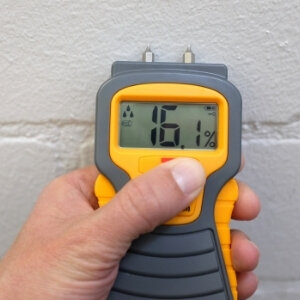
Prioritize sequence over budget. Dry the house out first, verified with a moisture meter, not a hand on the wall. Remediate next. Rebuild last. Rebuilding over damp framing buys a callback and a disclosure problem.
Spend where buyers and appraisers actually react. Furnace, water heater, and electrical panel if water reached them. Anything submerged there gets replaced rather than repaired, because an inspector will say so in writing.
Mold remediation should come with a clearance letter from an independent party. New York requires separate licensed mold assessors and remediators on most jobs, and the assessor can’t do the work.
Pull permits for the work that needs them. Unpermitted basement finishing is a common reason buyers walk away late, and open permits show in the municipal search.
Cosmetic repairs come last and come cheap. Paint, trim, and flooring. Twelve thousand dollars on a finished basement that floods again in two years is money you won’t see at closing.
Know when to stop. If the repair list exceeds roughly 15% of the home’s restored value, the renovation math gets thin. If your community rules the work a substantial improvement, meaning the cost reaches fifty percent of the structure’s market value, local floodplain law can force you to elevate the whole building. Selling the house as-is is the cleaner exit.
Frequently Asked Questions
Do I have to disclose a flood that happened before I owned the house?
You disclose what you know. If prior flooding came up when you bought the house, in a claims history report, or from a neighbor, say so on the Property Condition Disclosure Statement.
Will an insurance claim on the property hurt my sale?
It lands in the record either way through CLUE reports, so present it rather than hide it. A documented claim with invoices and a clearance letter beats a buyer hearing “we handled it.”
Can I sell a house with an active mortgage and unresolved flood damage?
Yes. Your servicer may hold insurance proceeds in escrow and release them against the cost of completed repairs, so call before you spend. Payoff still happens at closing.
How fast can a flooded house actually close?
With a cash buyer and clear title, two to three weeks is realistic in New York once attorneys exchange contracts. Financed sales take longer because lenders order appraisals and often require repairs.
Is a flooded house worth less even after full repairs?
Usually somewhat, yes. Buyers price in flood history, not just current condition, and homes in a mapped flood zone incur higher insurance costs that shape what people pay.
If you’re selling a flood-damaged house and want a straight number to compare your options, contact us when you’re ready. No pressure, no obligation, just an honest look at what the property is worth.
Helpful Michigan Blog Articles
- Should I Remodel My Kitchen Before Selling
- Types of Property Liens Every Homeowner Should Understand
- Can an HOA Foreclose on a House in Michigan
- Can I Sell My House if My Spouse is in Jail in Michigan
- Should I Replace My Roof Before I Sell My House
- How to Take Your House Off the Market in Michigan
- Selling a House With a Child Support Lien
- What Happens If You Sell Your Michigan House for Less Than You Owe on the Mortgage
- How Will Medicaid Know If I Sell My House
- Can You Cancel a Listing Agreement With a Broker in Michigan
- How to Sell a Flood-Damaged House Fast