
![Can I Sell My House While My Spouse Is Incarcerated in [market_city]](https://image-cdn.carrot.com/eyJidWNrZXQiOiJwcm9kdWN0aW9uLmNhcnJvdC11cGxvYWRzLm9uY2Fycm90LmNvbSIsImtleSI6InVwbG9hZHMvc2l0ZXMvMzU0MjIvMjAyNi8wOS9DYW4tWW91LVNlbGwtYS1Ib3VzZS1XaGlsZS1Zb3VyLVNwb3VzZS1Jcy1JbmNhcmNlcmF0ZWQucG5nIiwiZWRpdHMiOnsicmVzaXplIjp7IndpZHRoIjoxMTUyfSwidG9Gb3JtYXQiOiJ3ZWJwIiwid2VicCI6eyJxdWFsaXR5Ijo3MH19fQ==)

A booking at the county jail doesn’t change whose name is on your deed. I get calls from kitchen tables in Warren, Muskegon, and Kalamazoo. Somebody’s holding a mortgage statement, and there’s a court date circled on the calendar. The question is nearly always some version of “can I sell my house if my spouse is in jail?” Incarceration takes away freedom. It doesn’t take away property ownership. What it does is jam up a closing. Title companies want an original signature, and a notary needs a real person sitting across the table.
Can I Sell My House If My Spouse Is in Jail in Michigan?
Yes, you can sell. Families in this spot usually didn’t plan for any of it, and the bills keep coming while they sort it out. Most of the work comes down to getting the right signature in front of the right notary. How it goes depends mostly on how the deed is worded and whether your spouse will cooperate.
If you’re the only name on the deed, your spouse’s jail or prison status barely touches the sale. Are both names on it? Then you need their consent, given through their own signature or through a power of attorney they signed. Michigan has no shortcut that lets one spouse sign for the other just because the other one is locked up. If your spouse does sign a power of attorney, have a Michigan attorney look it over first so the title company will accept it.
What if your spouse won’t sign? Married couples in Michigan often own a home as tenants by the entirety. Neither spouse can sell that kind of ownership alone. A family law attorney can tell you whether a divorce filing or a court order is the realistic way forward.
The law usually isn’t what trips families up. The calendar is. A correctional facility runs on its own clock, and mail to a state prison moves slower than mail to your neighbor. Lining up a notary inside can eat weeks, and a regular buyer’s lender won’t wait around for that. Call the facility early and ask how it handles legal visits before you pick a closing date.
If you need a simpler way to sell, Blue Moon Acquisitions can make a cash offer for your Michigan house as-is. Get in touch with us to learn what the offer looks like with no pressure or obligation.
What Does Michigan Law Say About Property Ownership Between Spouses?

Zillow put the average Michigan home value at $266,292 as of August 31, 2026, up 4.0% over the past year. Plenty of that equity sits in homes titled to married couples. If both your names are on the deed, the way Michigan treats that shared ownership decides what either of you can do with the house.
Michigan gives married couples a kind of shared ownership that a lot of states don’t offer. It’s called tenancy by the entirety. According to Michigan Legal Help, it starts when a home is deeded to a married couple at the same time. The deed doesn’t have to mention it. Under that tenancy, each spouse is treated as owning the whole thing. That detail has surprised more than one family I’ve met after a title search. Neither of you can sell or transfer your interest without the other’s consent. A creditor chasing just one spouse generally can’t put a lien on the property, either.
That last point matters once criminal restitution or fines show up. A restitution order against one spouse usually can’t reach a home you hold together this way. A debt you both owe is another story.
Michigan isn’t a community property state like California, so skip the advice you read on a California legal blog if your house is in Oakland County. Our rules come from a different tradition. Under MCL 557.71, spouses have equal rights to the control, management, and income of the entireties property. Equal control cuts both ways. It keeps your spouse from acting alone, and it keeps you from acting alone too.
The tenancy has limits. If one of you dies, the surviving spouse owns the home outright, and it passes without probate. Divorce changes the picture too. Under MCL 552.102, divorced spouses become tenants in common unless the divorce judgment says otherwise. From then on, each of you holds a separate share you can sell on your own. A creditor of one spouse can go after that share, too.
Can a Spouse in Prison Sign Legal Documents to Transfer Property in Michigan?
Here the power of attorney earns its keep. A durable POA lets your incarcerated spouse name an attorney-in-fact to sign the purchase agreement, the deed, and the closing package for them. Your spouse stays an owner of the property the whole time. The agent can only sign what the document allows.
Michigan’s Uniform Power of Attorney Act took effect July 1, 2024. Under MCL 556.205, a power of attorney signed by the principal is durable if it’s acknowledged before a notary public. It also qualifies if it’s signed in front of two witnesses who add their own names. An agent named in the document can’t be one of those witnesses, though one witness may be the notary handling the acknowledgment. A POA your spouse signed before that date generally stays valid if it met the law in effect when it was executed.
Getting that done inside a facility is the hard part. Some jails have a staff notary, and some don’t, and certain prisons let a mobile notary in with advance clearance, while others want an attorney visit instead. Ask whether your spouse has to file a request form first, since some facilities book notary and legal visits days ahead. Call the facility’s records office and find out what’s allowed before you mail anything. A rejected packet can cost you weeks. Hang on to the original document once it’s done, since most closings need it.
I’d go with a limited power of attorney tied to that one property instead of a broad one that covers every asset your spouse owns. Narrow documents are harder to abuse, and title companies tend to review them faster. Before your spouse signs, send a draft to the title company and ask them to confirm it’ll work for closing.
If a cash sale sounds like the right option, contact us for an offer. We’ll take a look at the property, go over the details with you, and provide a straightforward cash offer with no pressure to accept.
What Happens to Property Rights When a Co-owner Goes to Prison?

Ownership survives incarceration completely. Nobody at the Michigan Department of Corrections takes title to a house, and a sentence doesn’t turn an owner into a non-owner. The owner inside still holds a full share of the deed, so any sale needs their signature, a valid power of attorney, or a court order.
Your share of the deed stays intact too. You can keep living in the house and paying the bills without a signature from anyone inside. Selling or refinancing the whole property is a different story, since that takes both owners. How you hold title matters here. A married couple holding as tenants by the entirety faces different rules than two siblings holding as tenants in common. Pull the deed from your county register of deeds and have a Michigan real estate attorney walk you through what it means for your house.
Meanwhile, the mortgage company and the local treasurer won’t pause just because a house sits empty. Interest keeps adding up on the mortgage while Michigan’s summer and winter tax bills come due on their usual schedule, whether or not anyone’s living there. Some homeowners insurance carriers also cancel coverage on a house nobody lives in. A vacant home in a Michigan winter is a frozen pipe waiting to happen. Someone on the outside has to keep the bills paid and walk through the place every week or two. Call your insurance agent and ask what the policy says about vacancy.
If you’re ready to move now, the market isn’t working against you. The West Michigan Lakeshore Association of Realtors reported that homes in Allegan, Ottawa, and Muskegon counties averaged 25 days on market in August 2026. The median sale price rose 2% to $369,000, and active listings climbed 12%. Buyers are out there. Still, a listed house needs showings, inspections, and a lender. Every one of those steps assumes an owner who can pick up the phone. If you’re considering a simpler sale, a cash-for-houses company in Farmington Hills and the surrounding cities in Michigan may offer another option to explore.
What Role Does a Court-appointed Representative Play for an Incarcerated Co-owner?
Families often call thinking a judge will just hand them control of the house because their spouse is behind bars. Judges don’t work that way. Michigan’s conservatorship statute, MCL 700.5401, does list confinement as one reason a person may be unable to manage property. Being incarcerated isn’t enough on its own, though. You’d have to prove, by clear and convincing evidence, that your spouse can’t manage their property well. The judge also has to weigh milder options first. A signed power of attorney is exactly that kind of option.
A spouse who can read a letter and sign a form from a cell still has full legal say over their share of the home. Conservatorship makes more sense when your spouse truly can’t handle their affairs because of dementia, serious illness, or an injury. The probate court in your county handles that petition. Its clerk’s office can tell you which forms and filing fees apply this year. Expect the process to take time, and expect the judge to ask for evidence.
What if your spouse is of sound mind but flat-out refuses to sign? Then you’re in a fight, and the road usually runs through divorce court instead of probate. A divorce judge can order marital property sold, so one spouse’s refusal doesn’t have to freeze the house in place. That’s a slower road, but it’s a real one. Once a judge orders the sale, investor home buyers in Detroit and other Michigan cities can make a cash offer on the house as it sits, with no showings to arrange around a co-owner who can’t be there.
I’ve watched families lose months and real money filing the wrong petition in the wrong courtroom. Spend an hour with a Michigan attorney first. Bring the deed, your latest mortgage statement, and your spouse’s inmate number. A good lawyer can usually tell you fast which door you’re supposed to walk through, and that’s cheaper than guessing.
What Is a Partition Action and How Does It Apply in Michigan?
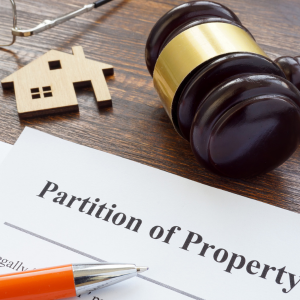
For years I assumed partition fixed any co-owned house where the owners disagreed. It doesn’t, and the exception matters here. A house you own with your spouse can follow different rules than one you share with a sibling or a business partner.
Partition cases in Michigan belong to the circuit court. MCL 600.3301 treats them as equitable in nature, and MCL 600.3304 gives that remedy to joint tenants and tenants in common. Married couples who hold as tenants by the entirety aren’t on that list. You can’t partition your way out of an entireties deed while the marriage lasts, since the law treats the couple as one owner. Neither spouse can force a sale alone.
If you’re married and your spouse in prison won’t help, your list of tools is short. Negotiating and waiting are two of them. Filing for divorce is the only one that changes how you own it. The entireties deed becomes a tenancy in common once the divorce judgment is entered, unless the judgment says otherwise. From there, the property can be divided or sold. A family law attorney can help you decide whether divorce makes sense before you take that step.
Other co-owners can face partition. Picture two siblings who inherited a cottage near Traverse City, and one of them is incarcerated. They hold it as tenants in common, so either one can bring a partition claim. The incarcerated sibling still has to be served with the complaint and gets a chance to respond. When splitting the land physically makes no sense, the court can order a sale and divide the proceeds. That’s nearly always true of a single-family house. A partition suit takes time and money, so I’d try to settle it between the owners first. If you’re considering a sale, Michigan cash buyers may also be an option worth exploring.
Frequently Asked Questions
Does a Power of Attorney Signed Inside a Michigan Prison Actually Hold Up at Closing?
Yes, if it’s executed correctly. Under MCL 556.205, the document has to be signed and either notarized or witnessed by two people who aren’t the named agent. The old durable power of attorney rules in MCL 700.5501 were repealed when the new act took effect. Check that any form you use follows the current law. Title companies will look hard at it. A form drafted for real property transactions beats a generic download. Build in extra time, because the facility decides when a notary gets through the door.
What Happens to the Mortgage While My Co-owner Is Locked Up?
Nothing changes, and the lender doesn’t care why a payment is late. If the incarcerated owner was the one paying, the loan goes delinquent on the same schedule it always would. Michigan foreclosures can also move faster than most people think. That pressure is why a lot of these sales happen quickly instead of after a year in court.
Can I Sell My Share Without the Other Owner?
If you’re a tenant in common, yes, you can convey your undivided interest to someone else. In real life, almost no retail buyer wants part of a house they can’t fully control, so the market for it is thin. Investors who buy these interests do exist, and they price in the hassle.
If you’re somewhere in the middle of all this and just want to know what your options look like, it costs nothing to ask. Send us the address, tell us who’s on the deed and where things stand, and Blue Moon Acquisitions will tell you honestly whether a cash sale makes sense or whether you’re better off waiting, refinancing, or talking to a lawyer first. Reach out to us at (586) 209-3290. No pressure, no obligation, and no one will call you twice a day.
Helpful Michigan Blog Articles