
![Can an HOA Force a Home Foreclosure in [market_city]](https://image-cdn.carrot.com/eyJidWNrZXQiOiJwcm9kdWN0aW9uLmNhcnJvdC11cGxvYWRzLm9uY2Fycm90LmNvbSIsImtleSI6InVwbG9hZHMvc2l0ZXMvMzU0MjIvMjAyNi8wOC9DYW4tYW4tSE9BLUZvcmNlLWEtSG9tZS1Gb3JlY2xvc3VyZS5qcGciLCJlZGl0cyI6eyJyZXNpemUiOnsid2lkdGgiOjExNTJ9LCJ0b0Zvcm1hdCI6IndlYnAiLCJ3ZWJwIjp7InF1YWxpdHkiOjcwfX19)

The day your HOA dues come due and go unpaid, the lien may already exist. In a condominium, it does. The Michigan Condominium Act attaches it to your unit the moment the charge is assessed, with no grace period and no warning letter first. The association can record it with the county register of deeds whenever it decides to. In a standard HOA, whether a lien attaches at all comes down to the documents you signed at closing. Most homeowners learn which one they’re in the hard way, when the mail brings something scarier than a bill.
Can an HOA or COA Foreclose on a Home in Michigan?
Waving this question off with a casual “probably not” has cost Michigan homeowners real money. In a few cases, it’s cost them the house. The short answer is yes. A condominium association (COA) can foreclose on your home in Michigan. A traditional homeowners’ association (HOA) may be able to as well, depending on what its governing documents say.
The type of community you live in changes almost everything. Under the Michigan Condominium Act, a COA can put liens on units for unpaid assessments and enforce those liens through foreclosure. Whether a standard HOA can force a sale of your property comes down to the community and the paperwork behind it. Reading that paperwork carefully is worth the hour it takes.
Michigan never enacted a general HOA statute. Standard HOAs operate under the Michigan Nonprofit Corporation Act, and they lean on their own declaration, bylaws, and rules for collection authority. If those documents don’t grant lien rights, the HOA’s options narrow fast.
So a condo owner in Novi or Rochester Hills sits in much clearer legal exposure than someone in a subdivision whose CC&Rs are thin on enforcement language. Know which situation you’re in before you decide to wait out a dispute.
Early last year, I bought a condo in Clinton Township from a longtime landlord splitting assets in a divorce. He was stunned to learn the COA had already recorded a lien on the unit. Roughly eight months of unpaid dues had piled up behind it. We cleared the lien at closing, and it ate into what he expected to walk away with. He never knew it was there, quietly growing the whole time.
Plenty of homeowners assume an association can’t foreclose while the mortgage is current. It doesn’t work that way. An association’s right to foreclose has nothing to do with whether you’re paid up on your mortgage. Your bank and your HOA are two separate creditors, each with its own set of rights.
Michigan HOA and COA Laws That Govern Assessments and Foreclosures

Sit across from me at your kitchen table and ask how any of this is legal, and I’d tell you two things. Michigan law hands condominium associations a lot of power. Most homeowners never read what they signed at closing.
Authority for Michigan condominium assessment liens comes from Section 108 of the Condominium Act, MCL 559.208. Subsection (1) says unpaid assessments become a lien on the co-owner’s unit the moment they’re assessed. So do interest, collection and late charges, advances the association makes for taxes or protective liens, attorney fees, and fines the condominium documents authorize. The statute ties the lien to assessment rather than to recording. It arises on its own when the charge comes due, with no paperwork required to trigger it.
Where do you find your own copies? Your master deed and bylaws came in the packet handed to you at closing, and most people file that packet and forget it. The board secretary or the management company can send another set. Your county register of deeds keeps the master deed on file, too. Read the article covering collections first, then the section on solutions.
Those documents decide more than people expect. They set how the association calculates each unit’s share, what the late fees are, when a balance gets handed to an attorney, and whether a fine counts as an assessment. Two condo communities on the same street can run collections very differently, because their documents read differently. The Act draws the outer limits. Your own documents fill in everything inside them. Nobody at the COA is going to walk you through that, so the reading falls to you.
No bill enacted or pending in the Michigan Legislature over the past 24 months has touched the assessment collection, lien, or foreclosure rules of MCL 559.208. The foreclosure statutes at MCL 600.3201 et seq. haven’t moved either. The newest community association law on the books, the Homeowners’ Energy Policy Act (2024 PA 68, effective April 1, 2025), deals with solar panels and other energy-saving improvements. It is written for homeowner associations, and attorneys are still arguing over whether it reaches condominium associations at all. Either way, it has nothing to do with unpaid dues or foreclosure. If you’ve been waiting on a change in the law to rescue your situation, it hasn’t arrived.
Some states run everything through one comprehensive HOA statute. Michigan doesn’t. Condominiums fall under the Michigan Condominium Act, and everything else runs on its own documents. Michigan also declined to give associations super-lien priority. Association liens sit junior to first mortgage liens recorded earlier.
Hold onto that last piece. It shapes what happens when several creditors want the same house.
How HOA and COA Assessments Work and What Fees Can Trigger Foreclosure
What actually pushes a homeowner into foreclosure territory?
Under Section 559.208 of the Michigan Condominium Act, a condominium association can foreclose on a unit once assessments go unpaid and the association records a notice of lien. The statute ties nothing to a set number of missed payments. What it does require is 10 days between mailing that notice and the start of a foreclosure action. One skipped payment, one bounced autopay, one bill mailed to an old address, and you’re further along than you think.
Recording the notice of lien doesn’t create it. Recording makes the lien enforceable in a foreclosure action, since the lien attached on its own the day the charge went out. That gap catches owners who assume nothing is official until paperwork lands at the register of deeds.
Michigan sets no minimum dollar threshold and no minimum delinquency period before a condominium association may foreclose. There’s nothing here like California’s dollar amount or its 12-month minimum rule. Associations in this state can move quickly on fairly modest balances, which shocks homeowners who assume the law sets some floor before things escalate.
Ask the HOA for a full ledger before you argue about anything. A good one shows every charge, every payment, and the date each hit your account. Late charges and interest often make up more of the balance than the original bill did. Math errors happen. Payments get applied to the wrong owner, credits vanish in a management company handover, and a charge from two years ago turns out to belong to your neighbor. You can’t dispute what you haven’t read line by line.
One pattern I keep seeing: owners in places like Farmington Hills or West Bloomfield Township get hit with special assessments for parking lot resurfacing or roof repairs. They don’t dispute the charge in time. Then they’re staring at a lien on the property for an amount that feels arbitrary. Fines on their own usually can’t support a foreclosure unless the governing documents treat fines as assessments. Regular dues and special assessments are fair game after a short wait.
Ready to sell your home for cash in Michigan? Get a fair offer and close quickly.
How the HOA or COA Lien and Foreclosure Process Works in Michigan
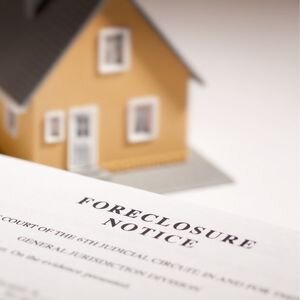
Most people picture a foreclosure starting with a courtroom and a judge. In Michigan, that’s only one of two paths. The other skips the courthouse and moves faster than homeowners expect.
Under MCL 559.208(2), a condominium lien may be foreclosed in two ways. Foreclosure by advertisement is non-judicial, which means the association doesn’t have to file a lawsuit before selling the property. Judicial foreclosure is the other route. There, the association files a complaint in circuit court and asks a judge to order a sale.
Either path starts with notice. The notice of lien has to be recorded with the register of deeds in the county where the unit sits. A copy then goes to the delinquent co-owner by regular first-class mail, so the association needs a current mailing address on file. At least 10 days have to pass after that mailing before a foreclosure action can begin.
Keep your address current with the board, even if you’ve moved out and rented the property out. First-class mail needs no signature, and nobody has to prove you read it. Forwarding orders expire. I’ve watched an owner lose most of that 10-day window, simply because the envelope chased them to an old street.
Once publication and posting requirements are satisfied, the property goes to a sheriff’s sale. MCL 600.3216 requires the county sheriff or a deputy to run it at public auction. A quiet private transfer isn’t an option. The buyer walks away with a sheriff’s deed, subject to the co-owner’s right of redemption.
Judicial foreclosure means a lawsuit asking a court to order the sale of the unit and satisfy unpaid assessments. The complaint gets filed in circuit court in the county where the property sits. It may also ask for a money judgment covering unpaid assessments, attorney’s fees, and other costs the condominium documents permit. That list adds up fast.
After the sheriff’s sale, the redemption period runs six months from the date of sale. If the property is abandoned, it shrinks to one month. That six-month window is your last real chance to take the home back by paying off what’s owed.
How HOA and COA Liens Affect Your Mortgage in Michigan
Your mortgage lender finds out whether you tell them or not. The lien gets recorded in the public register of deeds, and any title search pulls it immediately.
A COA’s lien sits ahead of all other liens except state or federal tax liens and a first mortgage of record, unless that mortgage was recorded after the COA records its lien. Michigan gives no association a super-lien that leapfrogs a first mortgage. When a bank forecloses on a unit, the association’s earlier delinquency may get wiped out. It doesn’t always.
The reverse is just as real. If the COA forecloses and the sale price falls short of your outstanding mortgage balance, your lender still holds a claim against you personally. Clearing the association debt at a foreclosure sale doesn’t erase what you owe the bank. Most articles on this subject stay on the HOA side and bury the mortgage exposure in a footnote.
Most lenders don’t escrow condominium dues the way they escrow taxes and insurance. That catches owners who assume every housing cost rides along inside the mortgage payment. Your HOA assessment is a separate bill from a separate creditor, and nobody at the bank is watching whether you paid it.
Your lender can also call the loan if a lien or a pending foreclosure counts as a default under your mortgage agreement. An attorney who knows Michigan real estate law can read that language with you in one consultation.
We buy houses in Detroit and other cities across Michigan, offering homeowners a simple, hassle-free way to sell quickly.
How to Stop or Avoid an HOA or COA Foreclosure in Michigan
Knowing the lien doesn’t cancel your mortgage obligations is exactly why waiting is the worst play available.
Options for stopping an HOA or COA foreclosure include paying the delinquency off, raising a defense such as improper assessment or bad accounting, and challenging charges that were unreasonable or unauthorized. If you think the association assessed fees incorrectly, that’s a legitimate defense to raise before or during a civil case.
Writing to the association matters more than homeowners realize. Plenty of boards will negotiate a repayment plan, especially when you’ve been current in the past, and the delinquency is recent. Put any agreement in writing and confirm the exact amounts owed, because attorney fees and interest keep accruing on top of base dues.
Ask for the payoff figure in writing, good through a specific date. Boards and their attorneys give different numbers on different days, and the one you hear on the phone rarely survives to closing. A written statement protects you from a surprise at the table. Send everything by email so there’s a trail, and keep copies. If a management company handles collections, copy the board president, too. People move on, files get handed off, and a paper trail outlives all of it.
If you’re facing a COA or HOA foreclosure in Michigan, think about consulting a foreclosure attorney about how the law applies to your situation. Local attorneys who handle HOA and condominium law in Wayne, Oakland, or Macomb County handle these exact situations every week, and many offer a free first consultation.
Timing decides which options stay open. A sale takes a few weeks to close, even when the buyer pays cash, so the day you start matters nearly as much as the price. If a foreclosure sale is already scheduled, the payoff has to be in hand before the gavel drops. After that, you’re inside the redemption period, and every route out gets narrower and more expensive. Homeowners who call in the first week of a delinquency usually have four or five ways to go. The ones who call two months after a lien is recorded usually have two.
Selling before the foreclosure sale is another legitimate exit. In June 2026, home prices in Michigan were up 3.5% year over year, with a median sale price of $299,064. A lot of Michigan homeowners still hold meaningful equity, even after the COA lien comes off the top. A quick sale clears the lien and puts money in your pocket instead of letting the property go at auction. The team at Blue Moon Acquisitions buys homes across Michigan and can usually move faster than the foreclosure timeline.
What Happens After an HOA or COA Forecloses on Your Michigan Home
The mail on a Tuesday tells an owner in a Ypsilanti condo community that the unit has already sold at the sheriff’s foreclosure sale. That was two months back, so the redemption clock has been running since. Four months are left to pay everything owed or walk away. That’s the situation a lot of Michigan homeowners land in.
Once six months pass with no redemption, the buyer from the sheriff’s sale takes clear title to the property. You lose the property and whatever equity you’d built. Proceeds above the association’s lien go to other lienholders in priority order. If anything survives after every lien is satisfied, the former owner may get it, though that rarely happens at auction.
The foreclosure isn’t necessarily the end of it. A condominium association may also pursue a money judgment for the delinquent assessments. Judgments follow you past the property itself. They reach your credit, your bank accounts, and your next real estate transaction. Treating an HOA lien like a minor nuisance is a mistake that compounds.
Losing possession is its own event, separate from losing title. Once the window closes, the new property owner can start court proceedings to remove anyone still living there. Nobody shows up the next morning with a truck. Still, you don’t want a judge setting your moving date, and you don’t want your belongings on the curb.
Do you have a relative sitting on an inherited property with HOA debt attached? An heir in a Dearborn Heights condo came to us on a Thursday. An auction date was already on the calendar, the garage still held the original owner’s tools, and the mortgage was behind, too. Selling quickly to a direct buyer was the only move that stopped both clocks at once. Blue Moon Acquisitions handled that one and closed before the sale date.
If you’re in a similar situation, Blue Moon Acquisitions works with Michigan homeowners facing HOA liens, foreclosures, and short timelines. No repairs, no listings, no waiting on the retail market. Median days on market in Michigan as of June 2026 was 33 days. That’s workable with time on your side and a real stretch when a foreclosure auction is six weeks out. Selling to a cash buyer skips the retail timeline entirely.
Frequently Asked Questions
What Happens to a Mortgage If the HOA Forecloses?
Your mortgage doesn’t disappear when the HOA or COA forecloses. Because the association lien is junior to a first mortgage recorded earlier, your lender keeps its claim on the property and can still come after you for the outstanding balance. Sometimes the bank steps in and redeems the property itself during the six-month window to protect its security interest. Call your mortgage lender and an attorney the day any foreclosure notice arrives.
How Can I Stop My Home From Being Foreclosed in Michigan?
Paying the full delinquency before the foreclosure sale is the most direct option. You can also dispute the assessment if the charges look incorrect or unauthorized, negotiate a repayment plan with the association, or sell before the auction date and satisfy the lien out of your equity. Acting early keeps more options open. Once the sale happens, you’re down to the six-month “redemption period”.
How Long Can You Stay in Your Home After Foreclosure in Michigan?
After a foreclosure sale, Michigan law gives you a six-month redemption period. You can stay in the home during that time and redeem it by paying the full amount owed. If the property counts as abandoned, that window shrinks to one month. Once redemption expires, the new title holder can begin proceedings to take possession. Selling to a direct buyer during that window is still legal and worth exploring.
Can an HOA Foreclose on Your House If You Own It Outright?
Yes. Owning free and clear of a mortgage doesn’t shield you from an HOA or COA foreclosure. The association’s lien attaches to the property whether or not a mortgage exists. Without a first mortgage lender in the picture, the association’s lien actually sits at a higher priority. Delinquent assessments stay enforceable against owners who paid off their loans, so free-and-clear status changes nothing about the obligation to pay dues.
If your Michigan home is tangled up in an HOA or COA dispute, or the timeline is closing in faster than you planned, we’re happy to talk it through. No pressure, no obligation. Reach out to Blue Moon Acquisitions and tell us what’s going on. We’ve worked with owners in situations like yours, and we’ll give you a straight answer about what we can and can’t do.
Helpful Michigan Blog Articles
- Should I Remodel My Kitchen Before Selling
- Types of Property Liens Every Homeowner Should Understand
- Can an HOA Foreclose on a House in Michigan
- Can I Sell My House if My Spouse is in Jail in Michigan
- Should I Replace My Roof Before I Sell My House
- How to Take Your House Off the Market in Michigan
- Selling a House With a Child Support Lien